A reader’s notebook
Read past the headline. Then read it again.
My News Trend is about the everyday craft of following the news: noticing how a story is built, checking a claim before passing it on, and keeping a news habit that informs you without wearing you out.
Slow news
The news is not a race you have to win.
Most of us meet the news in fragments: a notification on a lock screen, a headline shared in a group chat, a clip that autoplays between two other clips. Each fragment arrives with the same urgency, whether it describes a war, a rumour or a celebrity’s new haircut.
This notebook is about stepping out of that rhythm without stepping away from the world. It is about reading a full article instead of three headlines, waiting an hour before forming an opinion on something that happened ten minutes ago, and knowing which sources you trust and why.
None of it needs special tools. It needs a little patience and a few habits, the same habits good editors have always used before a story goes to print.
Anatomy of a headline
Every story comes in layers.
An invented example, taken apart the way a sub-editor would see it.
- The kicker
- One small word above the headline that tells you which section you are in. It sets expectations before you read anything else.
- The headline
- Written to be short and to catch the eye. It is the part most often shared and the part most likely to leave out a detail.
- The standfirst
- The sentence under the headline. It usually carries the nuance the headline had no room for, so it is worth reading every time.
- The byline
- Who wrote it and in what role. A named reporter, a wire service and an opinion writer are three very different things.
- The opening paragraphs
- Where the who, what, when and where should appear. If they are missing, ask why.
The second paragraph is where the story actually starts.
Where a story travels
From the press to the dinner table.
A story changes a little every time it is passed on. Knowing the journey helps you work out which version you are holding.


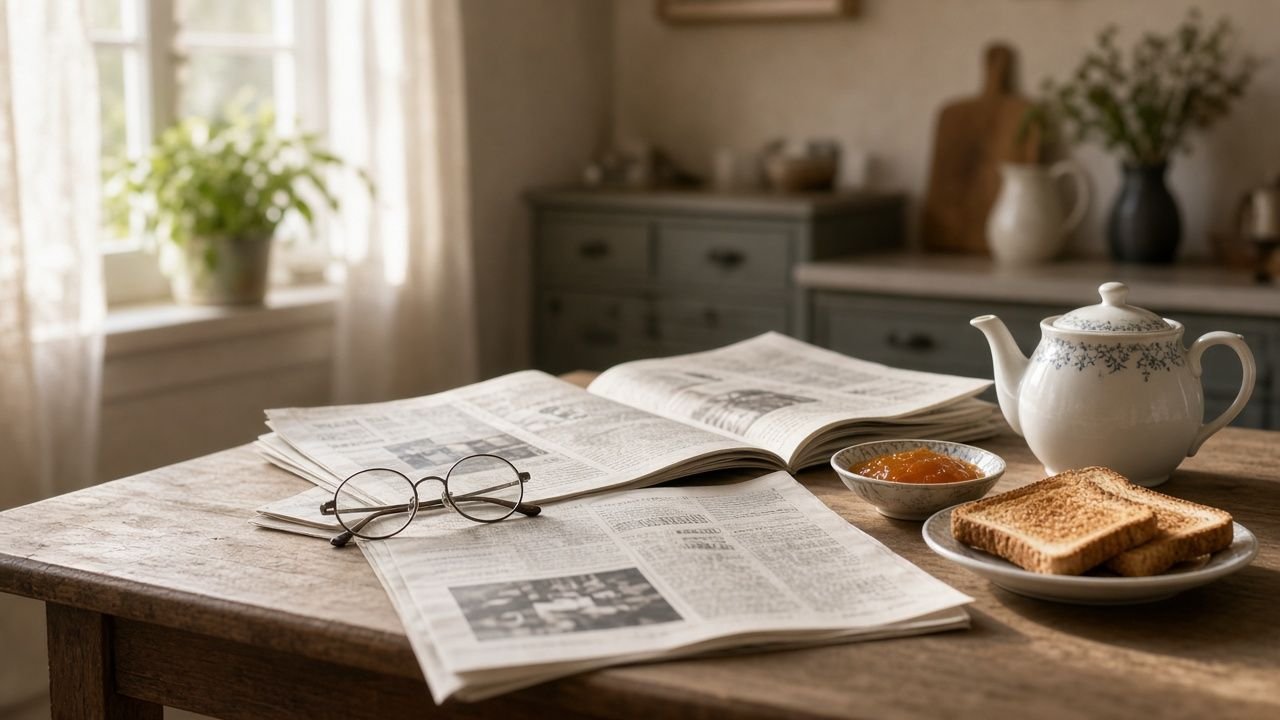
The weekend paper
Some stories are better a week late.
A weekly read, whether a printed paper, a magazine or a long newsletter, does something a live feed cannot. It waits until the facts settle, drops the false starts and tells you what actually changed. Many readers find one unhurried hour at the weekend tells them more than a week of alerts.
The trend and the story
What is loud is not always what is new.
What the trend says
“Everyone is talking about it.”
“Experts are stunned.”
“This one photo says it all.”
“Breaking, again.”
What the story says
How many people, where, and who counted them.
Which expert, from where, and what they actually said.
When and where the photo was taken, and by whom.
What is genuinely new since the last update.
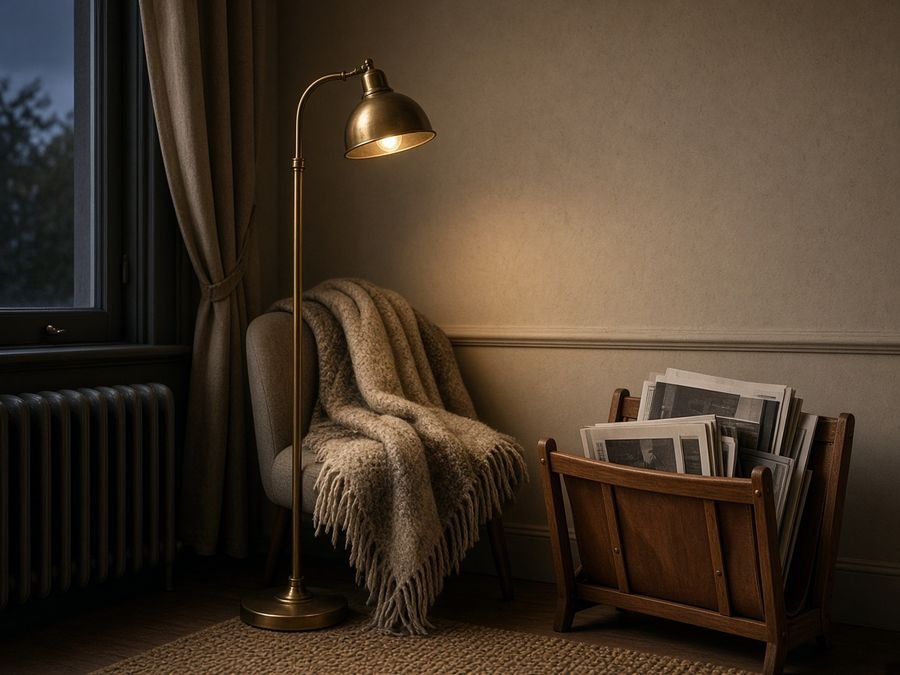
A reading corner
Give the news a place, not your whole day.
A time and a chair
Reading at a set time, in a set place, turns the news from something that interrupts you into something you sit down to. Morning coffee and early evening both work. Last thing at night rarely does.
A short list of sources
Two or three outlets you know well, with different strengths, beat thirty you skim. Learn how each one corrects its mistakes; that tells you a great deal.
Room for the good stuff
Science, culture, local life and plain good news are news too. A balanced reading habit leaves space for them.

Close the tab. Open the window.
The world will still be there in an hour, and you will read it better.